4news
Your location: Home: ->  news
2023
-
10
-
10
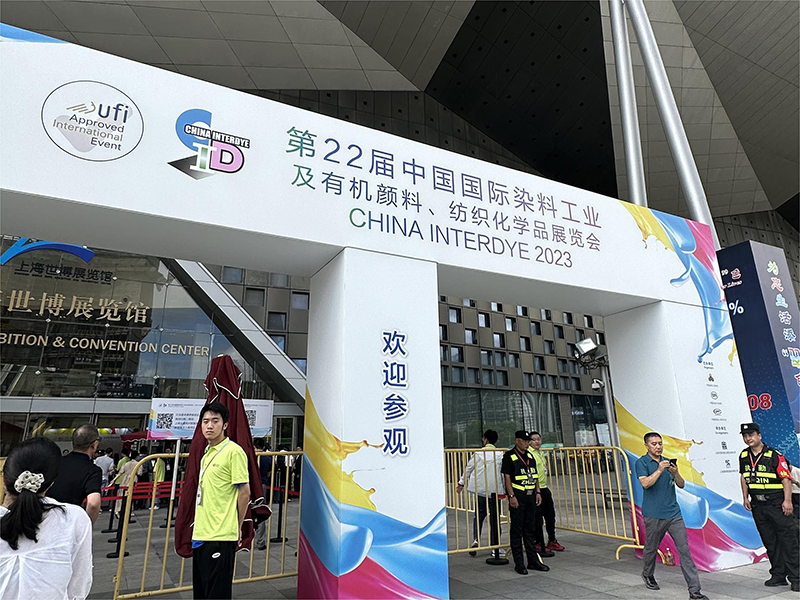
Guangdong Tiansheng New Materials Participated in the 22nd China International Dye Exhibition
2025
-
03
-
14
Direct dyes are applied to cellulose fibers (such as cotton, linen, viscose fibers, etc.) and protein fibers (such as silk, wool, etc.). However, the mechanisms of dyeing on these two types of fibers with completely different chemical properties are different
2025
-
03
-
14
Calendering finishing is a process that utilizes the plasticity of fibers under wet and hot conditions to flatten or create parallel fine diagonal lines on the fabric surface, thereby enhancing the fabric's luster. The calender is composed of several hard rolls and soft rolls with smooth surfaces. Hard rollers are metal rollers with highly polished surfaces or densely engraved parallel lines
2025
-
03
-
14
TASLAN plain weave is generally made of nylon, but polyester is also available. The latitude direction uses ATY, and the number of D in the latitude direction should be at least twice that in the radial direction
2025
-
03
-
14
During the printing and dyeing processes, the mechanism by which dyes infect fibers is the same, both involving three stages: adsorption, diffusion, and fixation, which are both distinct and interrelated yet mutually restrictive. In the printing process, a certain color of dye is applied to a certain part of the textile according to the
2025
-
03
-
14
The photofading mechanism of dyes is very complex, but mainly it is that after dyes absorb photons, they are excited and undergo a series of photochemical reactions that destroy their structure, leading to discoloration and fading. The light fastness of textiles mainly depends on the chemical structure of the dye, as well as its
   Total:183  Total Length:31 | The current page:1  9First   7Previous   Next page8   Finally page:  Jump: