Product Description
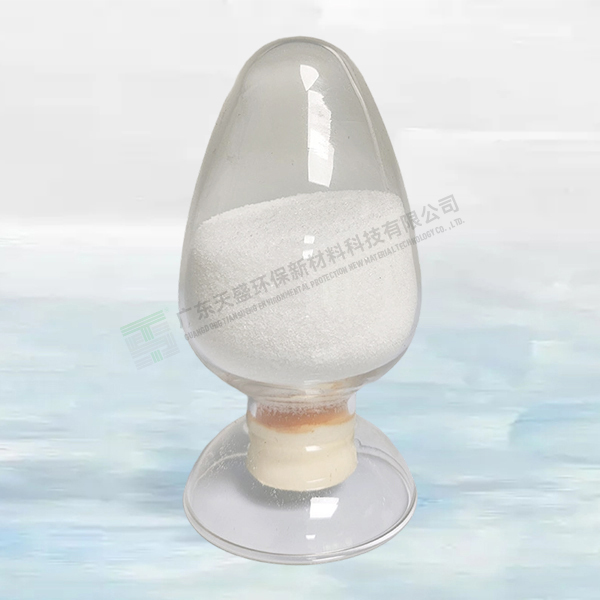
Non-ionic polyacrylamide is a water-soluble polymer and one of the series products of polyacrylamide (PAM). There are no ionic groups on its molecular chain, and it mainly relies on the amide group (-CONH₂) on the molecular chain to function, achieving flocculation through physical adsorption. It is suitable for positively charged or neutral suspension systems and is an important multi-functional additive in industry and water treatment. When selecting, the appropriate type should be determined based on water quality, process conditions (pH, salinity, etc.), and requirements (flocculation, thickening, etc.).
Mixing Method
The essence of dissolving non-ionic PAM is to fully stretch its molecular chains from a coiled state to exert optimal performance. Strictly following the principles of "slow addition, moderate stirring, and sufficient aging" will yield a uniform and stable solution.
Operating Procedure
Step 1: Water Preparation
Add about half of the total water volume into the dissolving tank, and start stirring (200-300 rpm).
Step 2: Powder Addition
Even Sprinkling: Slowly and evenly sprinkle the powder into the water vortex area (never dump it all at once or pour in the whole bag). A sieve or powder dispenser can be used to disperse the addition, ensuring the powder makes full contact with the water surface.
Step 3: Top-up and Aging
After all the powder is added, continue stirring for 10-20 minutes to allow the particles to disperse initially. Add the remaining water to reach the specified concentration, and continue stirring for 40-60 minutes until the solution is transparent and free of particles. Aging and Standing: Stop stirring and let it stand for 1-2 hours to allow the molecular chains to fully extend, so the solution reaches its best viscosity.
Application Method
The dosing of non-ionic polyacrylamide (NPAM) is the key link to its effectiveness. It is not just a matter of "adding it in," but rather a systematic project involving concentration, point, method, and mixing intensity.
1. The dosage must be determined through "beaker tests"; theoretical calculations are only for reference.
1. Take representative water samples into several beakers.
2. Prepare a series of concentrations of non-ionic polyacrylamide working solutions.
3. Fixed stirring procedure: Rapid stirring (150-200 rpm) for 1-2 minutes to allow the chemical and water to mix thoroughly; switch to slow stirring (50-60 rpm) for 5-10 minutes to promote floc growth.
4. Observe after standing (5-10 minutes), comparing floc size, settling speed, and supernatant clarity.
Select the dosage with the best effect and lowest cost as the on-site dosing baseline. The typical dosage range is very wide, ranging from 0.5 ppm to 20 ppm (0.5-20 grams of dry powder per ton of water).
2. Key Points for On-site Dosing
Dosing Method:
1. Gravity Drip Feeding: Suitable for small systems, controlling flow through valves.
2. Metering Pump Dosing: The most recommended method. Using screw pumps or diaphragm metering pumps allows for precise flow control, achieving continuous and stable dosing.
3. Avoid Direct Impact: The dosing pipe outlet should be inserted below the liquid surface, or aimed at a turbulent area of the water flow, which is conducive to rapid dispersion.
3. Mixing Intensity Control (Crucial for Flocculation):
Stage 1: Rapid Mixing (Dosing Point). Intense turbulence is required (G value approx. 300-600 s⁻¹), allowing the chemical to diffuse evenly throughout the water body within 10-30 seconds.
Stage 2: Slow Mixing (Reaction Tank). Gentle stirring is required (G value approx. 20-80 s⁻¹), maintained for 5-20 minutes, allowing the flocs to gradually grow larger and denser, avoiding being broken.
Precautions
1. Prohibition: Never pour NPAM powder or high-concentration mother liquor directly into the treatment tank.
2. Compatibility Test: If used in combination with inorganic coagulants (PAC/PFS), a compatibility test must be done to determine the dosing sequence and interval time (usually add the inorganic agent first, stir for 30-60 seconds, then add non-ionic polyacrylamide).
3. Pipe Adhesion: The solution is viscous; when stopping the pump, flush the dosing pipeline with clean water to prevent blockage.
4. Response to Performance Fluctuations: Small flocs, slow settling: insufficient dosage or inadequate mixing intensity; Loose, fragile flocs: excessive dosage or excessive stirring shear; Turbid supernatant: need to check if the pH is suitable, or if there are competing interfering substances.
Packaging and Storage
Packaged in 25Kg plastic-lined woven bags or paper-plastic composite bags, or according to user requirements. When storing and transporting non-ionic polyacrylamide, pay attention to heat and moisture protection to prevent packaging damage. The dry powder product will absorb moisture and form lumps if exposed for a long time. The number of stacking layers must not exceed 20. The effective storage period is 2 years. The product particle size is 20-80 mesh, and can also be produced according to user requirements.