Product Description
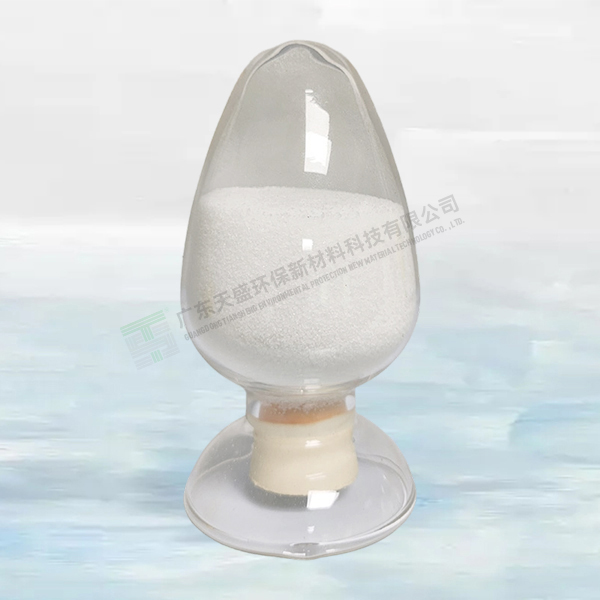
Anionic Polyacrylamide (APAM) is a water-soluble polymer, appearing as white or slightly yellowish granules or powder, with a molecular weight range of 8-25 million, solid content ≥88%, and dissolution time ≤60 minutes. APAM contains negatively charged groups, such as carboxyl groups, on its molecular chain, enabling it to effectively remove positively charged impurities in water treatment, thereby improving water quality and reducing impurity levels. The product achieves flocculation of suspended particles through adsorption, charge neutralization, and bridging, offering functions such as clarification, sedimentation promotion, filtration aid, thickening, and more. It is widely used in the sludge treatment of wastewater treatment plants and is often used in conjunction with inorganic flocculants.
Mixing Method
1. Use an automatic high-dispersion dissolver
Flocculants must be dispersed and carefully dissolved to prevent "fish eyes" (undissolved particles inside) caused by rapid surface dissolution leading to particle agglomeration. Therefore, various types of dispersion dissolvers are typically used.
2. If a powder dispersion dissolver is not used, follow these steps for dissolution: Fill the dissolving tank to half its capacity with water and start stirring. Evenly pour the weighed flocculant along the edge of the vortex created by the stirring. It is crucial that the flocculant mixes completely with the solvent before the solution becomes too viscous, as excessive viscosity can lead to clumping. Add water to the designated level and adjust to the specific concentration. Continue stirring until the high-molecular-weight flocculant polymer is completely dissolved.
Application Method
1. For use, prepare an aqueous solution with a concentration of 0.1%. It is advisable to use neutral water free of salt and other impurities.
2. During dissolution, sprinkle the anionic polyacrylamide product evenly into the stirred water, controlling the agitation speed at 100~300 rpm. Moderate heating (< 60°C) can accelerate dissolution.
3. Adjust the pH of the liquid to be treated to allow the anionic polyacrylamide product to function effectively (determine the suitable pH and dosage for this product series through testing).
4. When adding the anionic polyacrylamide solution, accelerate mixing with the liquid to be treated. Once flocs appear, reduce the agitation speed to facilitate floc growth and accelerate sedimentation.
Precautions
1. Granular polyacrylamide flocculant cannot be added directly to sewage. It must first be dissolved in water before using the aqueous solution for treatment.
2. The water used to dissolve granular polymers should be clean (e.g., tap water), not wastewater. Room temperature water is sufficient and generally does not require heating. Dissolution is slow when water temperature is below 5°C. Higher temperatures accelerate dissolution, but temperatures above 40°C accelerate polymer degradation, affecting performance. Generally, tap water is suitable for preparing polymer solutions. Strongly acidic, strongly alkaline, or high-salinity water is not suitable for preparation.
3. For polymer solution concentration, we recommend 0.1%—0.3%, i.e., adding 0.1g—0.3g of polymer powder per liter of water.
4. Operators should wear protective gear and wash skin thoroughly with water if contact occurs.
5. At the application site, water is often used for rinsing to prevent slipping and injury.
6. Anionic polyacrylamide products should be stored sealed in a cool, dry place.
Packaging and Storage
Packaged in 25Kg plastic-lined woven bags or paper-plastic composite bags, or according to user requirements. During storage and transportation of anionic polyacrylamide, protect from heat and moisture to prevent packaging damage. Long-term exposure of dry powder products will cause moisture absorption and caking. Stacking layers must not exceed 20. The effective storage period is 2 years. The product particle size is 20-80 mesh and can also be produced according to user requirements.