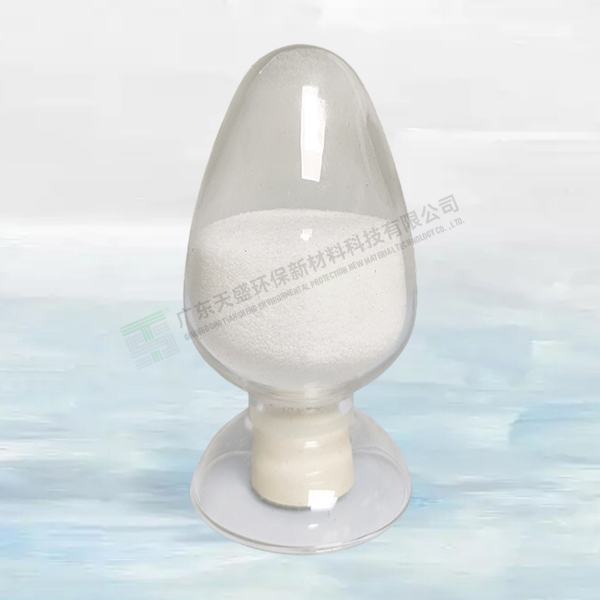
Product Description
Cationic polyacrylamide is a linear macromolecule polymer whose molecular chain carries a large number of positively charged groups. This substance is produced by copolymerization of acrylamide monomers and cationic monomers (such as dimethyldiallylammonium chloride), typically having a molecular weight ranging from 5 to 12 million. Its unique chemical structure allows it to form long-chain molecules with strong positive charges upon dissolving in water, making it a core material in water treatment, papermaking, oil extraction, and other fields. Depending on the cationic degree (typically 5%-60%), it can be subdivided into low, medium, and high cationic types.
Mixing Method
1. Prepare the product into an aqueous solution with a concentration of 0.2% (referring to solid content), preferably using neutral water free of salt.
2. When dissolving in water, sprinkle this product evenly into the stirred water. Proper heating (<60℃) can accelerate the dissolution (stirring time is approximately 40 minutes).
3. When preparing PAM aqueous solutions, use porcelain, galvanized, aluminum, or plastic containers. Do not prepare or store the solution in iron containers.
4. During dissolution, attention should be paid to adding the product evenly and slowly into a dissolver equipped with stirring and heating facilities to avoid caking. The solution should be prepared at an appropriate temperature and avoid prolonged, excessive mechanical shearing. It is recommended to stir at 60–200 rpm; otherwise, polymer degradation may occur, affecting the application results.
Application Method
1. Concentration Control: The prepared solution concentration is typically 0.1%-0.3%. A concentration that is too high may lead to material waste and uneven dosing, while too low may affect the treatment efficiency.
2. Sludge Property Matching: Select an appropriate cationic degree based on the source, characteristics, and composition of the sludge. Cationic polyacrylamide is mainly used for dewatering organic sludge. For sludge with strong acidity or alkalinity, the appropriate product type should be selected based on the pH value.
3. Floc Regulation: Adjust the polyacrylamide molecular weight to achieve the optimal floc size, ensuring the flocs can effectively drain water without becoming too compact, which could reduce the dryness of the dewatered cake.
4. Flocculant Screening: Before actual application, small-scale tests can be conducted to determine the optimal cationic polyacrylamide model and dosage, thereby obtaining the best flocculation effect and reducing operating costs.
5. Combined Use with Other Agents: If used in conjunction with other coagulants such as polyaluminum chloride (PAC), the two must be dissolved and mixed separately. They should be added in a specific sequence, with strict control over the dosage ratio and speed.
Precautions
The following aspects need attention in actual use to ensure its performance and the rationality of operations and environmental considerations:
1. The Importance of Product Selection: Different manufacturers and models of cationic polyacrylamide vary greatly in parameters such as molecular weight, ionic degree, and molecular structure. There is no "universal" product suitable for all water qualities and process conditions. Before practical application, it is usually recommended to conduct laboratory-scale small tests and on-site pilot tests to screen the most cost-effective product model and determine the approximate dosage range for the specific processing material (such as sewage properties, sludge source, pulp type). Improper selection may lead to poor results or even counterproductive effects.
2. Dissolution and Preparation Process: The product is typically a white granular or powdery solid that must be fully dissolved in water before use, prepared into a solution of a certain concentration (usually 0.1%-0.5%) prior to dosing. Clean water should be used for dissolution; avoid using water with high salinity or excessive impurities. The powder should be added slowly and evenly into the stirred water to prevent lumping. The stirring speed should be moderate—ensuring the particles disperse and dissolve fully without the molecular chains breaking due to excessive shear force. The prepared solution should not be stored for long periods and is generally recommended for use on the same day.
3. Dosing Point Selection and Dosage Control: In the process flow, the selection of the dosing point is crucial. For example, during sludge dewatering, the chemical solution is usually added to the mixing device just before the sludge enters the dewatering equipment. This ensures sufficient mixing and reaction time to form flocs without breaking them due to over-mixing. The dosage needs to be finely adjusted based on changes in material concentration and properties. Too little will be ineffective, while too much not only causes waste and increases costs but may sometimes cause charge reversal, restabilizing the system and affecting flocculation.
4. After adding the flocculant aqueous solution to the suspension, if intense stirring is carried out for a long time, the formed flocs will be destroyed.
5. PAM aqueous solutions should be prepared and used immediately. If the dissolved liquid is left standing for a long time, its performance will gradually decrease depending on the water quality.
Packaging and Storage
Cationic polyacrylamide should be stored in dry, clean, and well-ventilated places to prevent moisture absorption and packaging damage. Avoid contact with strong acids, strong alkalis, or high-salt substances to prevent failure.