4dhcpmingchen

【Origin Pic】

【Application Scope】

Drinking water grade spray-dried polyaluminum chloride is typically used for treating turbid water, high-turbidity water, and water bodies containing organic matter. It can rapidly purify water, improve water transparency, effectively remove odors and chroma, and enhance water treatment efficiency. It holds significant application value in sewage treatment plants, waterworks, and industrial production.

【Product Characteristics】

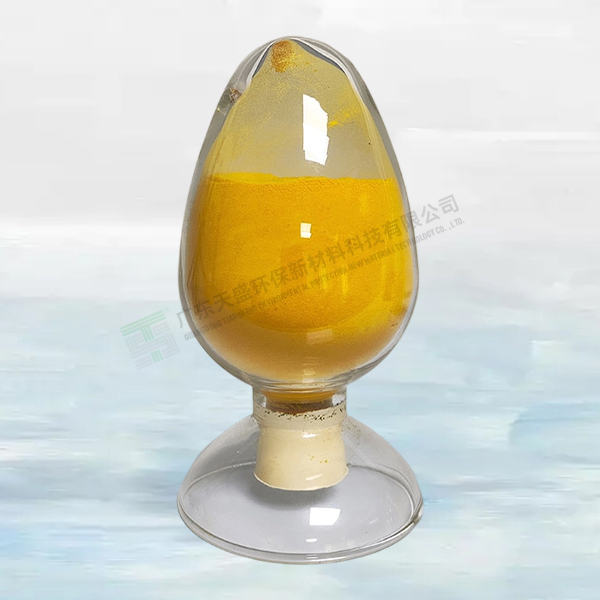
Appearance: Light yellow powder

Aluminum Oxide (Al2O3) content: ≥29.5%

Basicity: 50%-85%

pH value: 3-5 (1% aqueous solution)

Heavy Metals: Arsenic ≤0.0005%, Lead ≤0.001%, Cadmium ≤0.0005%, Hexavalent Chromium ≤0.0005%, Mercury ≤0.00001%

【Features and Properties】

Drinking water grade spray-dried polyaluminum chloride has the following characteristics:

1. High-efficiency flocculation: The spray-dried PAC has fine particles and a larger specific surface area, enabling it to bind with impurities and organic matter in water more quickly to form flocs, accelerating the sedimentation speed of suspended solids.

2. Low residue: Spray-dried PAC leaves low residue in water, avoiding secondary pollution and meeting environmental protection requirements.

3. Good stability: Spray-dried PAC maintains stable flocculation effects under different water qualities and pH values, offering a wide range of applicability.

4. Easy to use: Available as a solid powder, spray-dried PAC is easy to transport and handle, making operation simple.

Drinking water grade spray polyaluminium

Product Description

This product is produced by reacting high-purity aluminum hydroxide powder, calcium aluminate powder, and high-purity hydrochloric acid, followed by drying in a spray tower, resulting in a drinking water grade specification. During the production of spray-dried polyaluminum chloride, the mother liquor is uniformly sprayed into the dryer via nozzles. This ensures that the Al2O3 content is uniform and stable, making it easy to control within the specified limits and enhancing the adsorption capacity of colloidal particles, achieving both coagulation and flocculation effects—an advantage that other drying methods cannot match. The basicity (degree of polymerization) directly affects the water purification results. The spray polymerization process uses a pressure-type particle spray drying method to increase the product's degree of polymerization while maintaining the original activity of the mother liquor. Additionally, the basicity can be adjusted according to different water qualities.

Preparation Method

Dissolve the solid product in water at a ratio of 1:3 to form a liquid, then dilute it with 10-30 times more water to the required concentration. For example, to prepare a 10% PAC solution in a 1-ton mixing tank, first fill the tank with 1/3 of water, start stirring, then add 100kg of solid PAC. After full dissolution, continue adding water to the 1-ton mark and stir evenly.

Usage Method

The following are the common usage methods for PAC:

1. Preliminary Dilution: Usually mix PAC with clean water in a specific ratio to prepare a solution with a concentration of 5%-10%.

2. pH Control: Depending on the water quality, PAC can be used in weakly acidic or weakly alkaline environments. The effective pH range is 5-9, with the optimal pH being 6-8.

3. Dosage Application: Add the diluted PAC solution to the water to be treated in an appropriate manner. The dosage varies depending on the degree of water pollution and treatment requirements (conduct a small-scale test beforehand to determine the basic dosage, then fine-tune according to actual conditions).

4. Mixing: After adding the PAC solution, the water must be rapidly mixed to ensure the agent is evenly dispersed and fully contacts the colloids and suspended solids in the water. Rapid mixing time is approximately 10-30 seconds, generally not exceeding 2 minutes.

5. Sedimentation and Separation: Allow the mixed water to stand for a period, typically 30 minutes to an hour, to fully achieve sludge-water separation (to accelerate floc sedimentation, it is often used in conjunction with polyacrylamide PAM).

Precautions

1. As the PAC solution is slightly corrosive, the dissolution tank or mixing tank requires anti-corrosion measures or must be made of corrosion-resistant materials.

2. Do not mix PAC from different manufacturers or different models.

3. Use regular tap water to dissolve PAC; do not use sewage.

4. The shelf life of solid PAC is generally 12 months; it can still be used after absorbing moisture.

5. If the flocs settle slowly or the water becomes turbid after adding PAC, check if the quality of the agent or the dosage ratio is appropriate.

Packaging and Storage

Solid PAC should be covered during transportation to avoid rain and moisture, and the packaging must remain intact with clear labeling. The solid is packaged in 25kg bags with an inner layer of plastic film and an outer layer of plastic woven bags. The product should be stored in a dry, ventilated, and cool indoor place, avoiding moisture. It must not be stored together with flammable, corrosive, or toxic substances.