
4dhcpmingchen

【Origin Pic】

【Application Scope】

Mainly used as a flocculant for treating industrial wastewater (such as oily wastewater, printing and dyeing, papermaking wastewater, steel plant wastewater, etc.) and production water, as well as for treating highly toxic and fluoride-containing wastewater. In addition, it also has extensive applications in precision casting, tanning, and other fields.

【Product Characteristics】

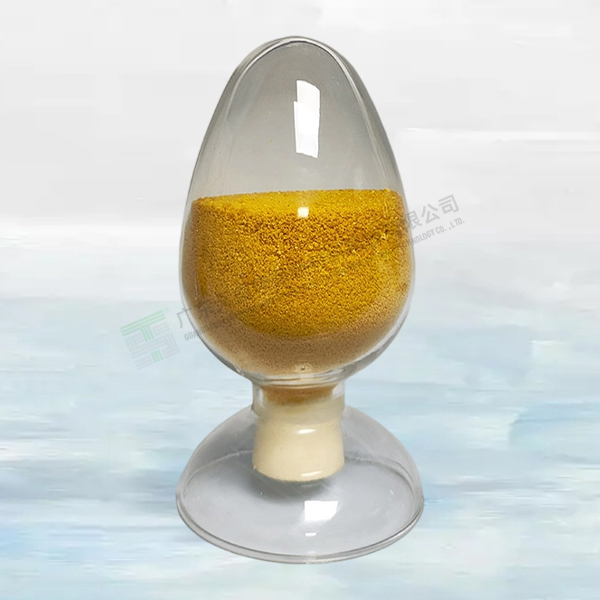
Appearance: Beige solid granules

Aluminum Oxide (Al2O3) content: 28%

Basicity: 75%-95%

pH value: 3-5 (10% aqueous solution)

【Features and Properties】

As the raw liquid undergoes plate-and-frame filtration, removing most of the insolubles, it features high content and extremely low insolubles. The dissolved solution is clear and transparent, possessing strong charge neutralization and bridging adsorption properties. In practical applications, plate-frame type polyaluminum chloride demonstrates three core advantages: First, its stable aluminum species distribution can adapt to wastewater with large pH fluctuations, avoiding secondary pollution caused by traditional aluminum salts; Second, the 28% aluminum oxide content ensures a reduction in dosage by over 30% and a 40% reduction in sludge volume, directly lowering transportation and disposal costs; More importantly, its unique plate-like crystal structure can effectively capture complexed pollutants such as arsenic and lead, which is difficult to achieve with ordinary drum-dried products.

Industrial grade plate and frame polyaluminium

Product Description

This product is manufactured using high-quality bauxite, calcium aluminate powder, and industrial hydrochloric acid through a reaction process followed by precision processing. The plate-and-frame type polyaluminum chloride (PAC) is produced by subjecting liquid PAC to plate-and-frame pressing and then drum drying. Filtered through multiple filter plates, the water-insoluble content is significantly reduced. A 10% aqueous solution appears as a light yellow transparent liquid, ensuring unobstructed pipelines and improving the efficiency of PAC. The plate-and-frame filtration type PAC exhibits low corrosivity to instruments and equipment in purification devices, allowing for simplified equipment design and reduced footprint, thereby saving investment and enabling high-speed water purification. It is currently the most ideal and economical high-efficiency water treatment agent. In practical applications, the 28% content plate-and-frame PAC demonstrates extensive adaptability. Whether for industrial wastewater or municipal sewage, it acts rapidly and precisely to upgrade water quality to meet discharge or reuse standards. Additionally, its ease of operation and storage has won favor among numerous water treatment enterprises.

Preparation Method

Dissolve the solid product in water at a ratio of 1:3 to form a liquid, then dilute it with 10-30 times more water to the required concentration. For example, to prepare a 10% PAC solution in a 1-ton mixing tank, first fill the tank with 1/3 of清水 (water), start stirring, then add 100kg of solid PAC. After full dissolution, continue adding water to the 1-ton mark and stir evenly.

Usage Method

The following are the common usage methods for PAC:

1. Preliminary Dilution: Usually mix PAC with clean water in a specific ratio to prepare a solution with a concentration of 5%-10%.

2. pH Control: Depending on the water quality, PAC can be used in weakly acidic or weakly alkaline environments. The effective pH range is 5-9, with the optimal pH being 6-8.

3. Dosage Application: Add the diluted PAC solution to the water to be treated in an appropriate manner. The dosage varies depending on the degree of water pollution and treatment requirements (conduct a small-scale test beforehand to determine the basic dosage, then fine-tune according to actual conditions).

4. Mixing: After adding the PAC solution, the water must be rapidly mixed to ensure the agent is evenly dispersed and fully contacts the colloids and suspended solids in the water. Rapid mixing time is approximately 10-30 seconds, generally not exceeding 2 minutes.

5. Sedimentation and Separation: Allow the mixed water to stand for a period, typically 30 minutes to an hour, to fully achieve sludge-water separation (to accelerate floc sedimentation, it is often used in conjunction with polyacrylamide PAM).

Precautions

1. As the PAC solution is slightly corrosive, the dissolution tank or mixing tank requires anti-corrosion measures or must be made of corrosion-resistant materials.

2. Do not mix PAC from different manufacturers or different models.

3. Use regular tap water to dissolve PAC; do not use sewage.

4. The shelf life of solid PAC is generally 12 months; it can still be used after absorbing moisture.

5. If the flocs settle slowly or the water becomes turbid after adding PAC, check if the quality of the agent or the dosage ratio is appropriate.

Packaging and Storage

Solid PAC should be covered during transportation to avoid rain and moisture, and the packaging must remain intact with clear labeling. The solid is packaged in 25kg bags with an inner layer of plastic film and an outer layer of plastic woven bags. The product should be stored in a dry, ventilated, and cool indoor place, avoiding moisture. It must not be stored together with flammable, corrosive, or toxic substances.